
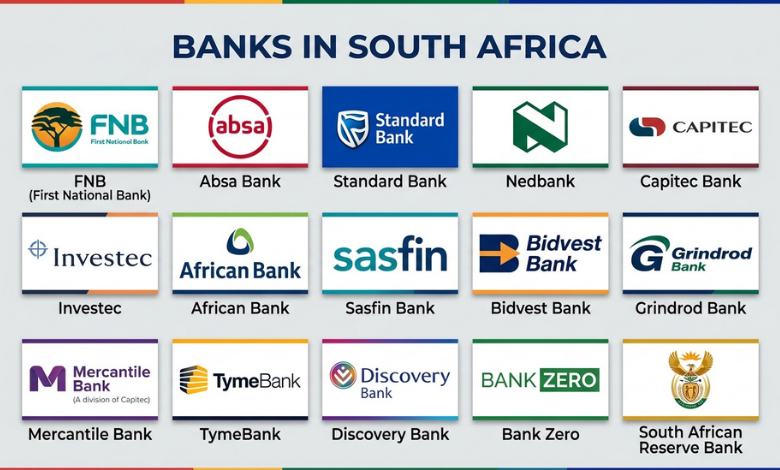
For South Africans living on a tight budget, the cost of maintaining a bank account can make a noticeable difference to monthly finances. In 2026, several banks offer entry-level accounts with monthly fees of R0 to R8, although the cheapest monthly fee does not always translate into the lowest overall banking cost.
TymeBank and Bank Zero offer R0 monthly-fee accounts, while Capitec, Absa and Standard Bank charge around R7.50 a month for their entry-level accounts. FNB and Nedbank’s comparable accounts cost around R8 a month.
For low-income customers, however, the more important question is what happens after the monthly fee. Cash withdrawals, debit orders, EFTs and cash deposits can quickly add to the cost of banking.
Which South African banks have the lowest monthly fees?
The cheapest entry-level accounts available in 2026 include:
| Bank | Entry-level account | Monthly fee |
|---|---|---|
| TymeBank | EveryDay | R0 |
| Bank Zero | Bank Zero | R0 |
| FNB | Easy Zero | R0 |
| Absa | Transact | R7.50 |
| Capitec | Global One | R7.50 |
| Standard Bank | Access Account | R7.50 |
| Nedbank | MiGoals | R8 |
| FNB | Easy PAYU | R8 |
The figures are based on 2026 pricing information and comparisons of ordinary entry-level transactional accounts.
That puts the monthly difference between the cheapest and most expensive accounts in this group at only R8.
Over a year, that difference is just R96. This is why consumers should look beyond the advertised monthly administration fee.
TymeBank is a strong option for low-income earners
For someone who mainly receives money electronically, pays by card and rarely uses cash, TymeBank’s EveryDay account is one of the strongest low-cost options.
The account has no monthly fee, while digital transactions such as EFTs and debit orders are free according to the 2026 comparison. Cash withdrawals remain chargeable, although customers can use TymeCode withdrawals at participating Pick n Pay and Boxer stores.
This makes a R0 account particularly attractive to people who receive a salary, social grant or other income electronically and conduct most transactions digitally.
The main limitation is for customers who depend heavily on physical cash.
Bank Zero offers another R0 option
Bank Zero also has no monthly account fee.
The digital bank is particularly suited to customers who are comfortable managing their finances through digital channels. EFTs and debit orders are free, according to the 2026 fee comparison.
Its drawback is similar to that of other digital-first banking options. Customers who regularly need cash or prefer extensive branch services may find a traditional bank more practical.
For a low-income customer who rarely handles cash, however, avoiding a monthly fee and keeping digital transaction costs low can make a meaningful difference over time.
Capitec remains attractive for cash users
Capitec’s Global One account costs R7.50 a month in 2026. The bank has kept that monthly fee unchanged under its current pricing.
Capitec charges R2 for payments to other South African banks, R3 for debit orders and R10 per R1,000 withdrawn at any South African ATM. Card purchases are free.
This makes Capitec particularly interesting for lower-income customers who still need access to physical banking and cash.
A customer should therefore not automatically choose a R0 account simply because it has no monthly fee. Someone withdrawing cash regularly could potentially find a low-fee traditional bank more convenient and cost-effective overall.
Absa Transact has a low monthly fee
Absa’s Transact account is another low-cost option, with a monthly fee of around R7.50 in the 2026 pricing comparisons.
Its attraction for cash users is access to Absa’s ATM and branch network, while certain digital payments and Absa ATM withdrawals can be cheaper than using a purely digital account.
For a customer who values physical access but wants to keep the monthly administration fee low, it is worth comparing Transact with Capitec and Standard Bank’s entry-level offerings.
FNB has a R0 option
FNB offers Easy Zero, which has no monthly fee for customers who qualify for that account.
The bank also offers the Easy PAYU account at R8 a month, giving customers different options depending on their banking needs.
FNB’s appeal extends beyond the monthly fee because customers may also value its digital banking platform, broader product ecosystem and rewards offering.
For someone with very light banking activity, Easy Zero can therefore be worth considering before opting for a paid account.
Standard Bank and Nedbank also target the entry-level market
Standard Bank’s Access Account sits in the low-cost category, with a monthly fee of around R7.50 in the latest 2026 comparisons. Nedbank’s MiGoals account is around R8 a month.
The important difference is that customers need to examine transaction charges as well.
A low monthly fee can become less attractive if a customer makes numerous debit orders, cash withdrawals or other chargeable transactions each month.
This is particularly relevant for low-income households, where even R20 or R30 in unnecessary monthly bank charges represents money that could otherwise be used for food, transport, airtime or other household expenses.
What is the best bank for low-income earners?
There is no single cheapest bank for every low-income customer.
The best option depends largely on how the account is used.
Best for mostly digital banking: TymeBank
TymeBank is particularly attractive if you receive money electronically, pay bills digitally and rarely need cash.
Its R0 monthly fee means you can avoid a recurring account administration charge altogether.
Best for customers who want a R0 account: Bank Zero
Bank Zero is another option for customers who are comfortable with digital banking and have limited cash requirements.
Its R0 monthly fee and free EFTs and debit orders make it competitive for light digital users.
Best for customers who regularly use cash: Capitec
Capitec is worth considering for customers who need regular ATM access or other physical banking services.
Its R7.50 monthly fee is low, while its published 2026 transaction pricing remains relatively straightforward.
Best for customers wanting a major-bank ecosystem: FNB
FNB’s Easy Zero gives customers an opportunity to bank without a monthly fee, while the broader FNB ecosystem can become useful as financial needs become more complex.
Best approach for comparing the banks
The most important calculation is not simply:
“Which bank charges the lowest monthly fee?”
Instead, consumers should ask:
“How much will this account cost me based on the transactions I make every month?”
Someone paying no monthly fee but withdrawing cash several times a month may spend more than someone paying R7.50 for an account with cheaper cash access.
Similarly, a customer with several debit orders should examine the cost of each debit order rather than focusing solely on the administration fee.
Bank fees can quietly eat into a low income
For someone earning R5,000 or R6,000 a month, small recurring charges can accumulate.
An unnecessary R20 monthly cost amounts to R240 a year. A R50 monthly banking cost becomes R600 a year.
That is why low-income consumers should regularly review their bank statements and identify charges for services they rarely use.
The move towards R0 monthly-fee digital accounts has also increased competition in South Africa’s banking market. Research comparing the country’s major banks shows that consumers now have considerably more choice at the entry level.
However, “free banking” should not be interpreted as meaning every transaction is free.
The cheapest account depends on how you bank
The 2026 banking market gives low-income South Africans several credible options.
TymeBank, Bank Zero and FNB Easy Zero are particularly attractive for customers who can conduct most of their banking digitally. Customers who regularly need cash or physical banking may find Capitec, Absa or Standard Bank more suitable despite their small monthly fees.
The difference between R0 and R8 a month is relatively small. What can make a much bigger difference is how much a customer pays for cash withdrawals, deposits, debit orders and other transactions.
For people living on a tight budget, the best bank account is therefore not necessarily the one advertised as free. It is the account that produces the lowest total cost for the way they actually use their money.
